4 hours ago
'Heated Rivalry' Star Hudson Williams Lauded for Authentic Portrayal of Autistic Queer Hockey Player
READ TIME: 3 MIN.
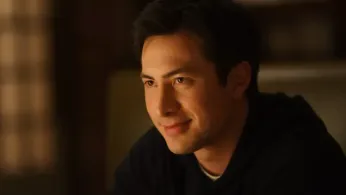
Hudson Williams' performance as Shane Hollander in "Heated Rivalry" has sparked significant acclaim for its thoughtful portrayal of autism within a queer romance narrative. The series, adapted from Rachel Reid's "Game Changers" novels, follows the intense rivalry and eventual love story between hockey players Shane Hollander and Ilya Rozanov, played by Connor Storrie.
In a recent interview with The Hollywood Reporter, Williams revealed how his personal connection to autism informed his approach to the character. He noted that his father is autistic, describing him as a "technical genius" who excels academically but prefers to avoid emotional interactions, likening himself to a Vulcan from "Star Trek". "After reading Jacob ’s scripts, even before the book, I immediately saw how he would operate. My dad is on the spectrum, he knows it," Williams stated. He emphasized drawing directly from his relationship with his father, highlighting a "sensitivity" that felt boyish and authentic to Shane.
Author Rachel Reid has explicitly confirmed Shane's autism, addressing long-standing fan theories. In a preview of an interview shared by Instagram user @anni.malter on December 14, 2025, Reid stated it is "canon that Shane is autistic." She explained that while writing the initial book, she did not intend neurodivergence, portraying Shane as "uptight/anxious/focused." However, after her own child's diagnosis, she recognized autistic traits in the character during the sequel, "The Long Game". Reid noted that show creator Jacob Tierney and Williams identified these traits immediately upon reviewing the scripts.
Fans have flooded social media with positive reactions, particularly appreciating the intersection of queer and autistic identities. On Instagram, one user wrote, “Seeing someone portray autism so lovingly, from a place of seeing it in someone they love, is so powerful.” They added gratitude to Reid, Tierney, and Williams for creating impactful representation. Reddit users echoed this, with comments like “Hudson’s acting as Shane is incredible. So spot on” and praise for the "nuance and thought" in his performance. On X , autistic queer viewers shared personal resonance: “To see a queer, autistic character onscreen … it means the world” and “Shoutout to Heated Rivalry for letting Shane Hollander be hot as fuck and also autistic. So thank you Heated Rivalry for letting us contain multitudes.”
Viewers have pointed to specific scenes that subtly convey Shane's neurodivergence, such as his insistence on routines like folding clothes before intimate moments or commenting on a "dirty" bed afterward. One Threads user, who is autistic and parenting an autistic child, noted Shane's literal interpretations and needs for structure, like specific foods and ginger ale. These details align with Reid's retrospective understanding and Williams' informed portrayal, fostering discussions on authentic representation in media.
The series has rapidly gained a dedicated following since its premiere, with new episodes airing Fridays on HBO Max. A Season 2 has been confirmed by the creators, promising further exploration of Shane and Ilya's relationship. While not yet available in the UK, a distribution deal is reportedly imminent.
Williams' approach stands out in LGBTQ+ media, where neurodiverse characters are underrepresented. His openness about his own ADHD—describing an unmedicated state affecting his "social battery"—adds layers to conversations about mental health in entertainment. Recently, Williams signed with CAA, signaling rising prominence amid the praise.
This portrayal has resonated deeply with transgender people, nonbinary individuals, gay men, and others in the LGBTQ+ community who share autistic experiences, highlighting media's role in affirming diverse identities. As "Heated Rivalry" continues, it sets a benchmark for inclusive storytelling that honors real-life complexities without stereotypes.